I approach my research from an interdisciplinary perspective, leveraging qualitative and quantitative methods from anthropology, psychology, and economics.
Ethnography
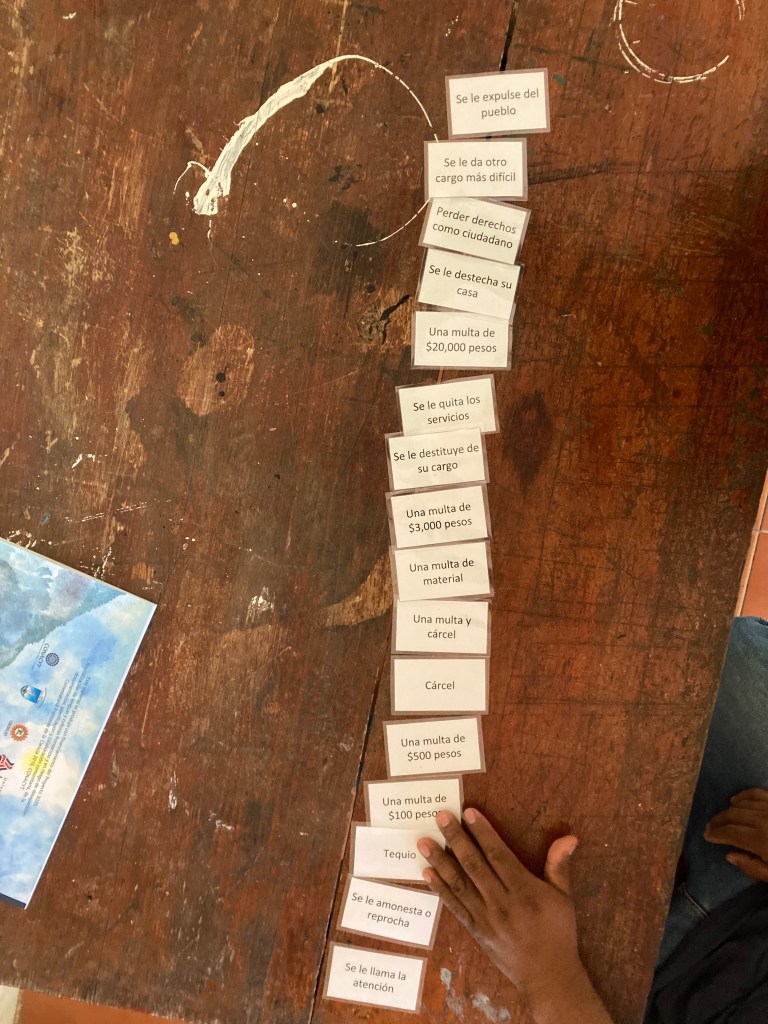
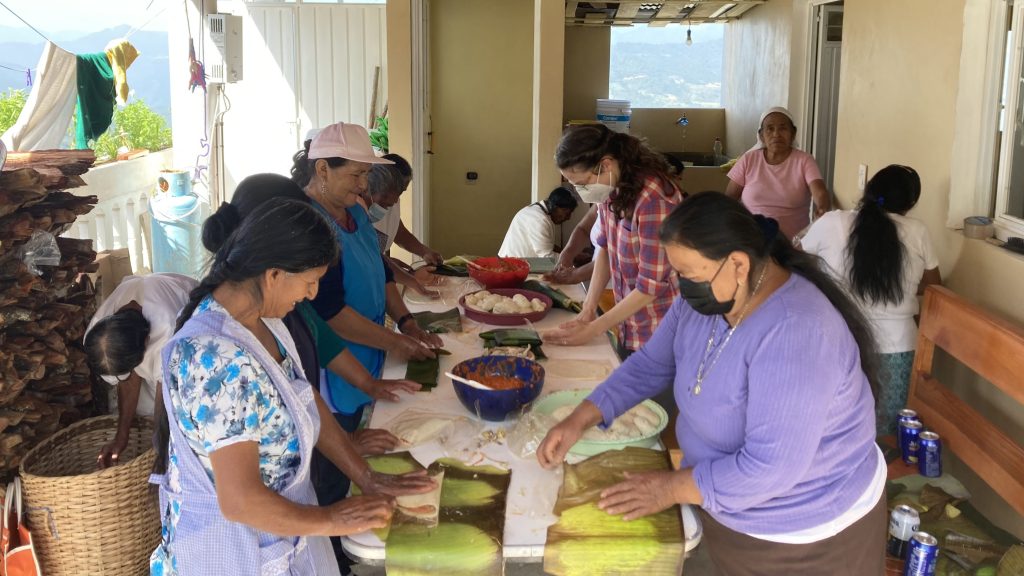
At my fieldsite in Oaxaca, I do in-depth ethnography in order to gain a rich understanding of local cultural practices, social norms, and daily life– providing important context for interpreting quantitative data. I use both qualitative and quantitative ethnographic methods, including participant observation, ethnographic interviews, focus groups, vignettes, and ranking tasks (Curtin et al., 2024a; Curtin et al., 2024c).
Surveys and psychometric scales
To gather demographic data and quantify people’s beliefs, attitudes, and psychological tendencies, I use structured surveys with psychometric scales (Curtin et al., 2024a; Curtin et al., 2024c).
Behavioral economics games
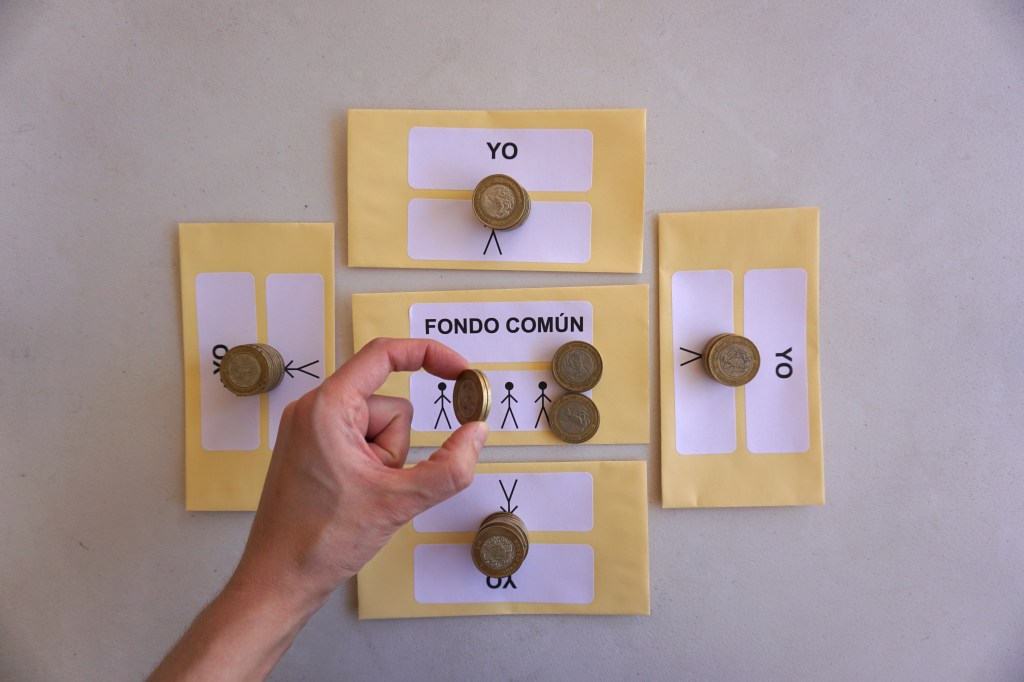
Behavioral economics games aim to model real-world decisions-making contexts in a controlled, experimental setting. In a survey, a participant might say they’d be willing to donate money to their needy neighbor… but is it just cheap talk? By offering economic incentives, these games can capture a more realistic picture of how people make decisions. I have used the Public Goods Game to study cooperation at my fieldsite in Oaxaca (Curtin et al., 2024a; Curtin et al., 2024c).
Coding ethnography & using secondary data
Where possible, I make use of existing data. This includes (1) coding written ethnography for quantitative analysis and (2) building new data sets from secondary data sources (Curtin et al., 2020; Curtin et al., 2024b).



 Cameron M. Curtin